
Inside Residential Rehab: What to Expect From Day One

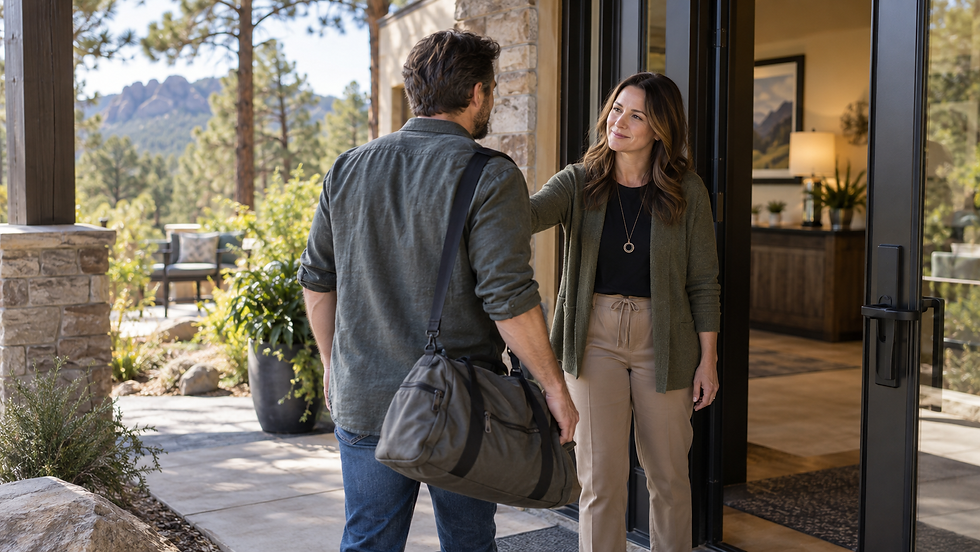
If you're wondering what happens in residential rehab, you're not alone, and you deserve a straight answer before you take that first step. Standing at the entrance of a residential treatment facility for the first time is one of the most courageous and disorienting moments a person can experience. You've made the decision to go, but no one has fully told you what happens once you walk through those doors. That uncertainty is real, and for many people, it's one of the last things keeping them from asking for help.
This article gives you a clear, honest picture of how residential rehab actually works, from the first conversation with a clinical staff member through the day you leave with a plan for what comes next. At Decision Point Center in Prescott, Arizona, the entire intake process is designed to replace that uncertainty with information and a path that belongs to you specifically. Every stage of care has a purpose, and understanding each one before you arrive makes the first step easier to take.
Here's what to expect: intake and assessment, medical detox if needed, structured daily programming, evidence-based therapies, a length of stay based on your clinical needs, and a discharge plan built to keep your recovery moving long after you leave.
What happens in residential rehab: intake and assessment
The first hours in any residential treatment program center on one goal: understanding where you are right now, medically, psychiatrically, and personally. This isn't an interrogation. It's a structured clinical conversation designed to gather the information your care team needs to build a treatment plan that actually fits your situation. The intake process typically includes a comprehensive substance use history, a physical health evaluation, and a psychiatric screening to identify any co-occurring mental health conditions that need to be addressed alongside addiction.
What the clinical assessment actually covers
During your intake evaluation, a licensed clinician will ask about the substances you've been using, how long and how heavily you've used them, any prior treatment history, and your current physical and mental health. These aren't checkbox questions filed away in a folder. The answers directly shape your individualized treatment plan, determining your therapy schedule, your psychiatric needs, and whether medical detox is a necessary first step before residential programming begins.
When medical detox is (and isn't) part of the picture
Not everyone entering inpatient rehab needs a supervised detox phase. For people with active physical dependence on alcohol, opioids, or benzodiazepines, medically supervised detox is a critical safety step, withdrawal from these substances can become medically serious without proper monitoring, medication management, and around-the-clock clinical support. For people whose substance use doesn't carry the same withdrawal risk, residential programming begins right away without a preliminary detox phase.
Building your individualized treatment plan
The assessment leads directly to a personalized care plan that maps out your therapy types, group schedule, psychiatric needs, and recovery goals. This isn't a one-size-fits-all program. It's a clinical roadmap built around your specific starting point, one that evolves as you progress through treatment, with therapy types and session frequency shifting as you meet clinical goals and build new skills.
What happens in residential rehab: a typical day
One of the most common questions people ask before entering residential treatment is: what will my days actually look like? The structure itself is therapeutic. Active addiction systematically dismantles daily routine, sleep patterns, and the ability to manage time or responsibilities. One of the first things residential treatment rebuilds is a predictable, purposeful daily structure that supports neurological and emotional regulation during early recovery.
Morning structure: how the day begins
Most residential programs begin the day in the early morning, often between 6:30 and 7:30 a.m., with a wake-up routine that includes hygiene time, medications and vital signs for those who need monitoring, breakfast, and a morning community meeting or goal-setting group. This intentional start isn't arbitrary. Establishing a consistent morning routine helps regulate mood, reduces anxiety, and creates a foundation for the clinical work ahead.
The clinical block: where the core work happens
The bulk of each day, typically six to eight hours, is dedicated to structured clinical programming. This includes individual therapy sessions, process-based group therapy, psychoeducation workshops, and skills-based work like cognitive behavioral therapy exercises and relapse-prevention planning. Psychiatric check-ins and medical appointments are scheduled within this block as well. The density of this programming is intentional: residential treatment is designed to be immersive, because meaningful behavior change requires sustained, concentrated effort.
Evenings, wellness activities, and personal time
Afternoons and evenings bring recreational and wellness activities such as yoga, exercise, art therapy, and nature-based time when available. Meals serve as structured community anchors rather than simply breaks in the schedule. Evening programming typically includes a peer support or 12-step meeting, a reflective group session, and personal time for journaling, reading, or quiet rest before lights out around 9:00 to 10:00 p.m. Downtime is structured rather than unguided, which matters in early recovery when unstructured hours can become high-risk windows.
The therapies at the core of residential substance use treatment
What separates quality residential treatment from informal or self-managed recovery isn't just the structure. It's the depth and integration of evidence-based clinical services running simultaneously across your entire stay. The therapeutic work in residential programs is designed to address not just your substance use, but the patterns, experiences, and conditions that drive it.
Individual therapy and cognitive behavioral therapy (CBT)
One-on-one sessions with a licensed therapist form the backbone of residential care. These sessions give you space to examine your personal history, your relationship to substances, and the specific patterns that need to change. Cognitive behavioral therapy is one of the most extensively studied modalities in addiction treatment, and it works by helping you identify the thoughts and emotional responses that fuel addictive behavior. Through CBT, you build practical coping tools that can replace old patterns when high-risk situations arise after treatment.
Group therapy and what it provides that one-on-one therapy can't
Group therapy operates on a different therapeutic mechanism than individual sessions. In a well-facilitated process group, sharing your experience among peers who have lived something similar often reduces shame through mutual recognition and peer support, outcomes that complement what individual therapy provides. Peer accountability, shared insight, and the direct experience of not being alone in your struggle are clinically meaningful results, not just supportive add-ons.
Dual diagnosis care and family therapy
A significant number of people entering residential rehab also carry depression, anxiety, PTSD, or other trauma histories that have never been properly treated. At Decision Point Center, dual diagnosis care treats both the addiction and the underlying mental health condition at the same time, which produces better outcomes than addressing one condition and then the other. Family therapy is also woven into residential treatment, beginning the work of repairing relationships during care rather than leaving it entirely to the period after discharge.
How long a residential stay actually lasts
Length of stay in rehab is one of the most practical questions people ask before entering treatment, and it deserves a direct answer. The standard benchmarks are 30, 60, and 90 days. Each represents a distinct phase of the recovery process rather than an arbitrary cutoff.
The 30, 60, and 90-day benchmarks
A 30-day program focuses on medical stabilization, safe withdrawal management, and the earliest stages of behavior change. Sixty days allows time for deeper therapeutic work, skill consolidation, and genuine insight into the root causes of substance use. Ninety days is typically recommended for more complex cases, co-occurring disorders, or individuals with prior treatment history, because durable change at that level requires more time. Evidence suggests that longer residential stays are generally associated with stronger long-term outcomes, including lower rates of relapse.
What determines the length of your specific stay
Clinical factors that influence how long you remain in residential care include the severity and duration of your substance use and any withdrawal complications. Psychiatric co-occurring conditions, prior treatment history, and your response to care during the program also shape the final determination. Insurance is a real factor as well: many plans authorize treatment in intervals and require clinical justification for extensions. A strong clinical team actively manages this process on your behalf, documenting medical necessity and advocating for the level of care you need rather than the minimum your plan will approve by default.
Aftercare and discharge planning: what comes next
Discharge planning in a quality residential program doesn't begin the week before you leave. It starts during the first week of treatment. The transition out of residential care is one of the highest-risk periods in early recovery, and the plan for what happens next needs to be thoughtfully built, not assembled at the last minute.
How step-down care works after inpatient treatment
The move from residential treatment to the next level of care is a gradual reduction in structure, not a hard stop. Most people transition to an Intensive Outpatient Program (IOP) or partial hospitalization program (PHP), which maintains clinical support and accountability while allowing increasing independence and a return to daily life. This graduated approach is associated with lower relapse risk compared to leaving a structured environment abruptly without a support system in place. Decision Point Center's continuum of care model is built around this principle: recovery support doesn't end at discharge.
Relapse prevention planning and long-term recovery support
Before you leave residential treatment, you will have a written relapse prevention plan that identifies your personal triggers, coping strategies, support network, and specific steps to take if you feel at risk. Ongoing connections to outpatient therapy, peer support groups, and medication management form the scaffolding of long-term sobriety. These aren't optional extras, they are the continuation of the clinical work you began during residential care.
Now that you know what happens in residential rehab, take the next step
That image of standing at the entrance of a residential facility, uncertain about what comes next, is one the most common reasons people delay the help they need. Now you have a concrete picture of what happens in residential rehab: the intake conversation and medical stabilization, the structured daily clinical programming, the evidence-based therapies, a length of stay built around your clinical needs, and a discharge plan that keeps recovery moving after you leave. Knowledge lowers the barrier to seeking help, and lowering that barrier is exactly the point.
If you or someone you love is ready to take the next step, Decision Point Center in Prescott, Arizona offers residential inpatient treatment with a licensed clinical team, dual diagnosis care, and a continuum of care model designed to support long-term recovery. You don't have to walk through those doors without knowing what to expect. Reach out to Decision Point Center today to speak with an admissions specialist, ask your questions, and find out whether residential treatment is the right fit for where you are right now.


Comments