
Cocaine Addiction: Why It's Hard to Quit & How to Get Help
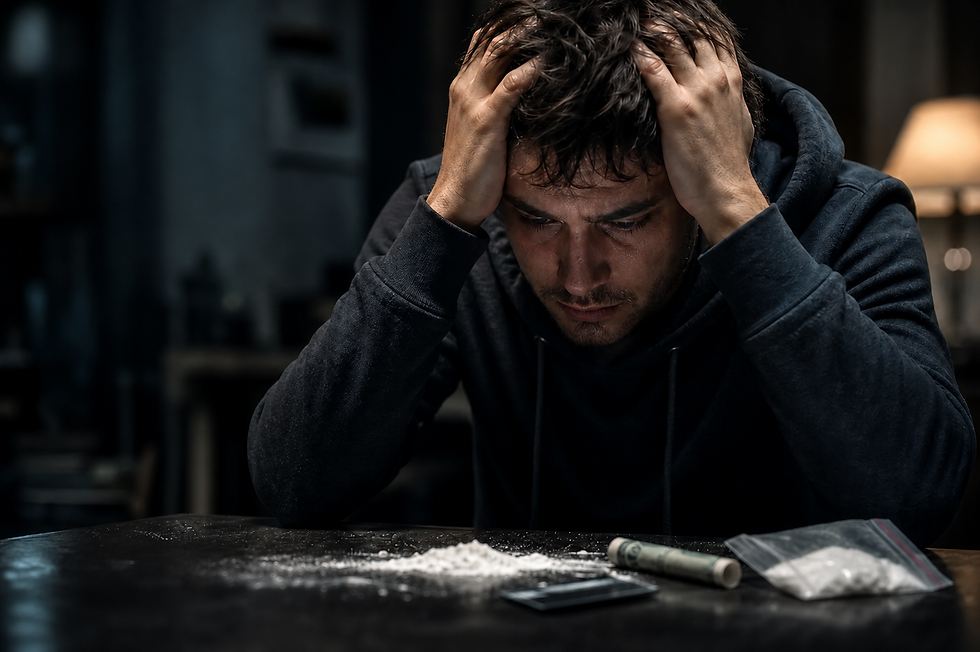
In 2023, cocaine addiction was involved in nearly 29,500 overdose deaths in the United States. Roughly 1.3 million Americans are currently living with active cocaine use disorder. Many of them have tried to quit on their own, sometimes repeatedly, and couldn't figure out why it never stuck. That's not a character flaw. It's neuroscience.
This article covers what makes cocaine so physically and psychologically difficult to stop using, what withdrawal actually looks and feels like, why depression and anxiety so often run alongside cocaine dependence, and what evidence-based cocaine rehab and treatment involves from day one through long-term recovery. For those considering inpatient care, Decision Point Center in Prescott, Arizona offers integrated treatment that addresses both the addiction and the mental health piece together, because treating one without the other rarely holds.
No shame here. No judgment. Just clear, clinical answers that help you or someone you love make an informed decision.
Why cocaine addiction is so hard to stop
Cocaine floods the brain's nucleus accumbens with dopamine by blocking the normal reuptake process. The result is an unnaturally intense reward signal, far stronger than anything food, connection, or achievement can produce naturally. Over time, the brain compensates by downregulating its own dopamine receptors, leaving the person unable to feel ordinary pleasure at baseline. This is the neurobiological foundation of stimulant addiction, and it takes hold faster than most people expect.
When the drug wears off, dopamine and serotonin drop sharply. What follows is the "crash": profound fatigue, dysphoria, and cravings that make using again feel like the only path back to normal. That crash-and-crave pattern is exactly how compulsive use takes hold. The fastest way to feel like yourself again is the same thing destroying you, and the brain cannot distinguish between the two.
Early abstinence feels worse than active use because the brain's reward circuitry has been altered. Without cocaine, everything feels flat. Motivation evaporates. Sleep doesn't restore. This is why "just deciding to quit" so rarely works. The altered neurochemistry of cocaine dependence is a clinical condition, not a willpower problem. Structured support isn't a luxury at this stage. It's a biological necessity.
Signs of cocaine addiction that are easy to miss
The physical signs are often the most visible: persistently dilated pupils, unexplained weight loss, frequent nosebleeds or a chronically runny nose, elevated heart rate, and declining personal hygiene. These symptoms tend to escalate gradually, which is part of why families sometimes don't recognize the pattern until it's already severe. What looks like stress or a difficult season in someone's life is often something much deeper.
Behavioral red flags follow a predictable pattern as well. Secrecy increases. Financial problems appear without explanation. Work performance drops, or employment ends entirely. Social withdrawal kicks in, and the people someone used to spend time with get replaced by people connected to use. These aren't random life problems. They're the downstream consequences of a brain reorganizing its priorities around a single substance.
The psychological symptoms are where cocaine use disorder often hides in plain sight. Between uses, a person may show signs of paranoia, anxiety, irritability, and an inability to feel pleasure (a state clinicians call anhedonia). During use, they appear euphoric, hyperconfident, and unusually talkative. After, they crash into depression and social withdrawal. This emotional volatility, cycling predictably around use and comedown, is one of the clearest clinical indicators that cocaine use has crossed into cocaine use disorder. Confirmed diagnostic markers include the inability to cut back despite wanting to, spending disproportionate time acquiring or recovering from cocaine, and continuing use even when consequences are clearly visible.
Cocaine addiction withdrawal symptoms and timeline
Withdrawal doesn't wait days to begin. Within hours of the last use, dopamine levels drop and the crash starts.
Acute withdrawal timeline
The acute phase lasts roughly three to five days and involves profound fatigue, depression, anxiety, and relentless cravings. A post-acute phase stretches through the first two weeks with mood instability, disrupted sleep, and vivid unpleasant dreams. For heavy users, protracted symptoms including low mood and episodic cravings can persist for one to two months.
Unlike alcohol or opioid withdrawal, cocaine withdrawal is rarely life-threatening from a purely physical standpoint. The real danger is psychiatric. Severe depression, suicidal ideation, and psychosis are all documented and clinically recognized risks during early abstinence. This isn't an exaggeration designed to frighten people into treatment. It's a factual reason why medical supervision during the withdrawal period changes outcomes in ways that white-knuckling alone simply cannot.
No FDA-approved medication exists specifically for cocaine withdrawal, but that doesn't mean supervised detox has nothing to offer. Supportive care, close psychiatric monitoring, symptom management for agitation and anxiety, and the ability to intervene if severe depression or suicidal ideation emerges are all part of what a professional environment provides. For anyone with a history of trauma, depression, or prior suicidal thoughts, attempting withdrawal in an unmonitored setting is a genuine safety risk, not just a comfort issue.
The dual diagnosis reality: cocaine addiction and mental health
Between 65% and 73% of people seeking treatment for cocaine use disorder have a co-occurring mental health condition such as depression, anxiety, or PTSD, according to dual diagnosis prevalence data cited by the Substance Abuse and Mental Health Services Administration (SAMHSA). That figure is not a coincidence. Many people begin using cocaine to manage symptoms they've never had properly treated: the low energy of depression, the hypervigilance of trauma, the crushing social anxiety that cocaine temporarily dissolves. This self-medication pattern doesn't create a side problem. It creates two intertwined conditions that feed each other.
Cocaine use disrupts the same neurochemistry that regulates mood, often making underlying mental health conditions significantly worse over time. The person who started using to feel more energized or emotionally functional now finds that abstinence reveals a mood disorder that's deeper and harder to manage than before they started. Treating the addiction while leaving the depression or anxiety untreated is one of the most predictable pathways to relapse after completing a standard program.
Dual diagnosis assessment process
Dual diagnosis treatment addresses both the substance use disorder and the co-occurring mental health condition simultaneously, within the same clinical framework. When the psychiatrist, therapist, and addiction counselor work from one integrated treatment plan rather than in separate silos, outcomes improve substantially. At Decision Point Center, dual diagnosis evaluation and treatment are built into the residential program from day one. Because there is no handoff between a separate mental health team and a separate addiction team, nothing falls through the cracks. It's one cohesive clinical environment designed for the full complexity of what someone is actually dealing with.
Evidence-based treatments that support lasting cocaine addiction recovery
Cognitive behavioral therapy (CBT) is the most researched psychosocial treatment for cocaine dependence. It helps patients identify the specific triggers that precede use, interrupt automatic responses to cravings, and build coping strategies that hold up when real-life stress returns. CBT effects are durable: clinical follow-up data show skill gains often increase after treatment ends, meaning the tools compound over time rather than fading. This is particularly important for cocaine, where protracted cravings can resurface months into recovery.
Contingency management is the most effective method available for achieving initial abstinence. It uses structured positive reinforcement, typically vouchers or prizes redeemable for goods, tied directly to verified negative drug screens administered multiple times per week. When combined with CBT, these two approaches carry the strongest empirical support of any current treatment for cocaine use disorder. Together, they address both the behavioral habits of addiction and the neurological reward system that drives compulsive use.
When to choose inpatient rehab
The question of inpatient versus outpatient care comes down to a straightforward clinical reality. Outpatient programs ask someone to manage early recovery while still living inside the environments, relationships, and stress patterns that drove use in the first place. Inpatient treatment removes that exposure and provides round-the-clock clinical support, structured daily programming, and the psychological safety needed for the hard work of recovery to actually happen.
When cocaine addiction is layered with co-occurring mental health conditions, residential care matches the clinical intensity to the actual complexity of the problem. At Decision Point Center, the residential inpatient program includes medical detox oversight, dual diagnosis evaluation, individual and group therapy, and an individualized treatment plan built around each patient's specific history and goals. That level of integration is what makes sustained recovery possible, not just short-term sobriety.
How to take the next step toward getting help
For anyone experiencing a cocaine overdose or acute medical emergency, call 911 immediately. For treatment referrals and support, the SAMHSA National Helpline at 1-800-662-4357 is available 24 hours a day, seven days a week, free and confidential. If suicidal thoughts are present during or after cocaine use, the 988 Suicide and Crisis Lifeline is the right first call. FindTreatment.gov provides a federal treatment locator for finding licensed programs by zip code.
Most people hesitate to call a treatment center because they don't know what it actually means. The intake process involves an initial conversation, a clinical assessment, insurance verification, and a treatment recommendation. There is no commitment required to make that first call. Decision Point Center's admissions team walks callers through every step without pressure, including helping navigate insurance coverage for inpatient crack cocaine addiction and powder cocaine treatment programs in Arizona. The point of that call is information, not obligation.
Recovery from cocaine addiction starts with one decision to reach out. It doesn't require a perfect moment, a rock bottom, or absolute certainty. Whether you're exploring options for yourself or researching on behalf of someone you love, taking that first step toward inpatient care at a center equipped to handle both addiction and the mental health conditions underneath it is the highest-leverage move available right now.
Real recovery addresses the root, not just the symptom
Cocaine addiction is not a moral failure. It is a neurological condition with significant psychological depth, and for many people it is tangled up with depression, anxiety, trauma, or unresolved pain that was never properly addressed. That complexity is precisely why surface-level treatment so often falls short, and why the people who struggle most aren't failing at recovery. They're failing to get the right level of care for what they're actually up against.
The evidence for what works is clear. Cognitive behavioral therapy, contingency management, and integrated dual diagnosis care have strong clinical track records and decades of research behind them. The key is matching the treatment to the full scope of what someone is dealing with, not just the most visible part.
If you or someone you care about is struggling with cocaine use disorder, inpatient cocaine rehab and treatment at a facility like Decision Point Center provides the clinical depth, the mental health integration, and the structured environment needed to address the underlying conditions rather than manage surface symptoms. That is where real recovery begins: in clinical depth, not willpower alone.


Comments