
When Adderall Use Becomes Adderall Abuse: What to Know
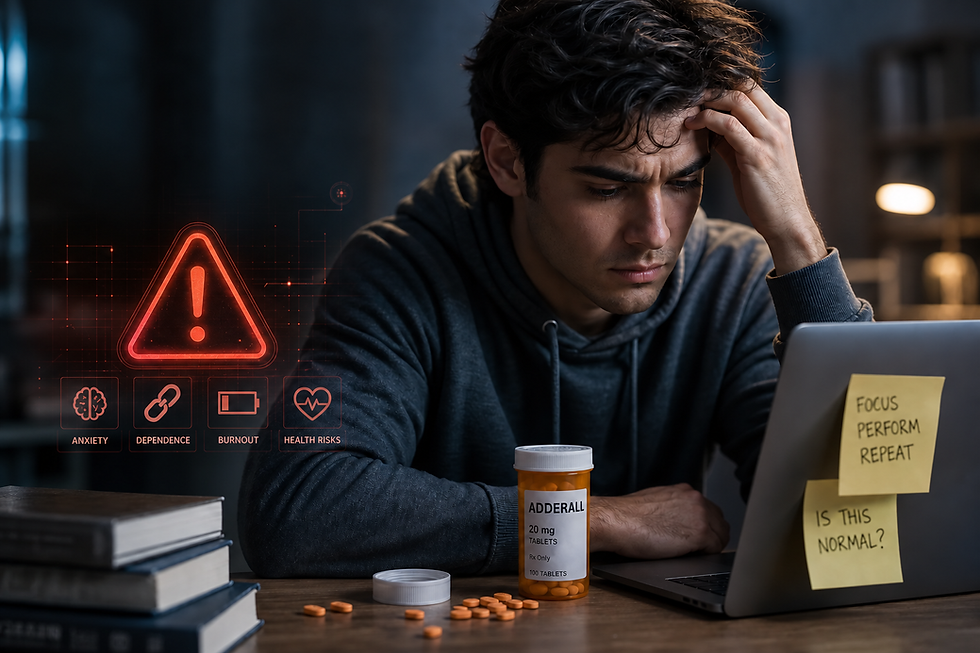
Adderall misuse affects millions of Americans each year. In 2023, approximately 3.9 million people age 12 and older misused prescription stimulants, and Adderall is commonly implicated as one of the most frequently misused medications in that category. That number represents real people: students pulling all-nighters, professionals chasing productivity, individuals quietly struggling with a habit that started as a solution to something else entirely.
This article exists to help you draw a clear line. There is a meaningful clinical difference between taking Adderall as prescribed and using it in ways that put your brain, heart, and overall health at risk. That line can feel blurry, especially when misuse begins with the best of intentions. The goal here is to make it visible, without judgment, without alarm, and with the clarity that makes change possible.
If you're reading this for yourself or for someone you love, keep going. Recognition is where everything else becomes possible.
What Actually Counts as Adderall Misuse
Adderall misuse means taking it without a valid prescription, taking more than your doctor prescribed, using it more frequently than directed, or using it for reasons outside its intended medical purpose. That definition is broad by design, because the ways people engage in non-medical use of prescription stimulants are surprisingly varied.
Commonly reported patterns include performance enhancement (using Adderall to study, work longer, or stay alert), appetite suppression for weight loss, and emotional coping, where people use the drug to manage stress, low mood, or exhaustion. None of these feel like "drug abuse" to the person doing them. Clinicians often observe that most people in these situations see themselves as solving a problem, not creating one.
The Patterns Most People Don't Recognize as Misuse
Taking a friend's Adderall before an exam is misuse, even if it worked and you didn't feel any side effects. Increasing your own dose because your prescribed amount "stopped working" is also misuse, one that often escalates quietly over time. Using the medication to curb appetite or push through emotional exhaustion rounds out the most common patterns, and none of these feel dangerous in the moment because they're typically framed as discipline or self-improvement.
Why Intent Doesn't Protect You from the Risks
The brain responds to the drug, not the reason you took it. Adderall works by increasing the release and blocking the reuptake of dopamine and norepinephrine. That neurochemical process unfolds the same way whether you took it for a diagnosed condition or because you had a deadline. Tolerance and physical dependence develop through the same mechanism regardless of your original motivation.
This is why someone with ADHD following a carefully monitored therapeutic plan is in a fundamentally different clinical situation than someone self-medicating or escalating doses without oversight. The difference isn't the substance. It's the structure, monitoring, and dosing precision built into legitimate treatment.
According to recent data, 25.3% of people who have a stimulant prescription report some form of misuse, which tells you this isn't a problem limited to people who never had a prescription. It happens inside legitimate prescriptions too, when the boundaries of the treatment plan start to blur.
Warning Signs That Use Has Crossed a Line
Most people don't experience every warning sign at once. Clinicians typically note that two or three consistent patterns from the categories below are worth taking seriously, not as proof of addiction, but as a signal that something has shifted and deserves honest attention.
Physical Red Flags Your Body Is Sending
Persistent insomnia and significantly disrupted sleep cycles are among the earliest and most consistent Adderall addiction symptoms. The drug keeps the nervous system activated, and over time that wears down your body's ability to rest even when the medication isn't active. Rapid, unexplained weight loss from appetite suppression often follows, along with a racing or pounding heartbeat, sweating, tremors, and dilated pupils. Chronic headaches and gastrointestinal discomfort that reliably appear after use are also documented physical markers. These aren't coincidental; they reflect your cardiovascular and nervous systems working harder than they should be, consistently.
Behavioral Patterns That Signal a Problem
Running out of a prescription early and working to get more ahead of schedule is one of the clearest behavioral indicators of ADHD medication abuse. So is keeping use secret, becoming defensive when someone raises the topic, or continuing to use despite clearly declining performance at work or school. Compulsive thinking about the next dose, planning use around it, or feeling anxious when access is uncertain, these behavioral patterns reflect dependence taking hold even when the person experiencing them doesn't recognize it yet.
Cognitive and Emotional Shifts Worth Taking Seriously
Heightened anxiety, irritability, or sudden anger that feels out of proportion to the situation is a common cognitive effect of amphetamine misuse. Paranoia, racing thoughts, and disorganized thinking can also develop, particularly with escalating doses. The most telling sign for many people is the mood crash: the period when the medication wears off that feels emotionally unmanageable, often leading to another dose to stabilize. When you can't concentrate, function, or feel motivated without the drug, that's not the medication working. That's dependence.
What Prescription Stimulant Misuse Does to Your Body Over Time
The risks of Adderall misuse are real, documented, and serious. They escalate significantly with continued or increasing use, and some can be long-lasting or severe. The FDA specifically warns that misuse of Adderall can lead to overdose and death, with risk increasing at higher doses or through non-oral routes like snorting.
Immediate Health Effects of Adderall Misuse
Short-term misuse places immediate strain on the cardiovascular system. Elevated blood pressure, irregular heart rhythm, palpitations, and chest pain are all documented effects. Neurologically, tremors, dizziness, and seizure risk at high doses are well established. Hyperthermia, dehydration, and gastrointestinal distress are common at acute levels of use. On the psychiatric side, acute anxiety, panic attacks, and stimulant-induced psychosis (including hallucinations and paranoia) can occur even in people with no prior history of mental illness.
What Chronic Misuse Leads To
Long-term amphetamine misuse can escalate into stimulant use disorder, a diagnosable clinical condition with significant consequences. Persistent cardiovascular damage is among the most serious outcomes, with hypertension, cardiomyopathy, heart attack, and stroke all documented in people with chronic stimulant misuse histories. Psychiatric effects compound over time as well, including worsening anxiety disorders, paranoia, and severe depressive episodes during withdrawal. Chronic sleep debt and malnutrition, both common in people misusing stimulants regularly, weaken the immune system and overall health in ways that compound the damage across every other front.
Recognizing Adderall Overdose Signs and What to Do Immediately
An Adderall overdose is a medical emergency. If you suspect one, act immediately. Extended-release formulations like Adderall XR release medication over eight to ten hours, meaning symptoms can persist and worsen well beyond the initial dose window. Don't wait to see if things improve on their own.
Overdose Symptoms That Require Emergency Response
Severe chest pain, shortness of breath, and a dangerously elevated or irregular heart rate are all grounds to call 911 immediately. Extreme agitation, confusion, hallucinations, or paranoia require emergency response, as do seizures, fainting, or loss of consciousness. A dangerously high body temperature combined with unresponsiveness is a life-threatening presentation that requires immediate medical intervention. Do not attempt to manage these symptoms at home.
Step-by-Step First Response While Help Is on the Way
Call 911 immediately. Once you've done that, contact Poison Control at 1-800-222-1222 for real-time guidance while you wait for emergency services. Stay with the person and keep them as calm as possible. Move them to a cool, quiet space and loosen any excess clothing, because stimulant overdoses can significantly raise body temperature.
Do not give caffeine, alcohol, or any other substance, and do not attempt to induce vomiting. If the person is unconscious but breathing, place them on their side to reduce choking risk. If they are not breathing and you are trained in CPR, begin immediately and continue until help arrives.
When responders arrive, tell them exactly what was taken, how much, when, and whether any other substances including alcohol or opioids were involved. If there is any possibility opioids were also taken, administer naloxone if it's available while waiting for emergency services.
What Effective Treatment for Stimulant Dependency Looks Like
Adderall addiction is treatable, but the treatment model is primarily behavioral. There are currently no FDA-approved medications specifically for stimulant use disorder, which means the most important tools are therapeutic, not pharmaceutical. The good news is that behavioral approaches have strong evidence behind them and work well when matched to the right level of care.
Behavioral Therapies with the Strongest Evidence
Contingency management is the current standard of care for stimulant use disorder, with the most robust evidence for improving both abstinence and treatment retention. It works by delivering structured, immediate rewards for confirmed abstinence, typically verified by urine testing. Systematic reviews have found it improves abstinence rates at 12 weeks with an odds ratio of 2.29, a clinically meaningful effect. Cognitive behavioral therapy is the most widely used complement, helping people identify triggers, reframe thought patterns, and build concrete relapse prevention skills. The Matrix Model and Community Reinforcement Approach are additional structured programs with meaningful evidence. Motivational interviewing and family therapy are commonly used alongside these to improve engagement and keep recovery connected to real relationships.
Choosing the Right Level of Care
Outpatient treatment, including Intensive Outpatient Programs, works well for people who are medically stable, have a supportive home environment, and can commit to consistent therapy attendance. Residential inpatient care is warranted when dependency is severe, when co-occurring psychiatric conditions are present, when the home environment isn't conducive to recovery, or when previous outpatient attempts haven't held.
The first step isn't choosing a treatment level. It's getting an honest, thorough clinical assessment by a licensed team that can evaluate the full picture. That assessment process should look at substance use patterns, mental health history, medical factors, and life circumstances together, because stimulant misuse rarely exists in isolation. Many people misusing Adderall are also managing anxiety, depression, ADHD, or unprocessed trauma, and effective treatment has to address all of it. A whole-person evaluation is how you find the right level of care, not a checklist or a website quiz.
Where to Turn and Who to Call
If something in this article resonated with you or described someone you care about, the next move is to reach out. Recognizing the problem is clarity, not failure, and clarity is exactly where recovery starts.
National Helplines and Crisis Contacts
The SAMHSA National Helpline is available 24 hours a day, seven days a week, at 1-800-662-4357. It's free, completely confidential, and available in both English and Spanish. Poison Control at 1-800-222-1222 handles both emergencies and non-emergency questions about medication and overdose. The 988 Suicide and Crisis Lifeline is available for anyone experiencing a psychiatric crisis connected to Adderall misuse, including the anxiety, paranoia, and depressive episodes that can emerge during withdrawal. If you're not ready to talk, text-based options are available through the Crisis Text Line: text HOME to 741741.
Taking the Next Step Toward Professional Support
An initial clinical evaluation is an assessment, not a commitment. It's a conversation with a licensed clinician who can help you understand what's actually happening and what options are available. If you're trying to figure out how to approach this with a loved one, lead with concern rather than accusation. Describe what you've observed, express that you're worried, and offer to help them find support rather than demanding they agree they have a problem.
Dependency on prescription stimulants is a health condition, not a character flaw. It responds to evidence-based treatment the same way other health conditions do, with the right intervention, delivered at the right intensity, by a clinical team that understands the full picture. If you're in Arizona or willing to travel, Decision Point Center offers an individualized, whole-person approach to stimulant dependency, because lasting recovery requires more than treating the substance in isolation. Call our team to schedule an assessment and talk through what recovery could look like given your specific circumstances.



Comments